Brass Solid Section Manufacturer in India
Explore precision-engineered brass solid sections for
industrial manufacturing, custom profiles, machining
operations and specialised engineering applications.
Brass Solid Sections for Modern Engineering Requirements
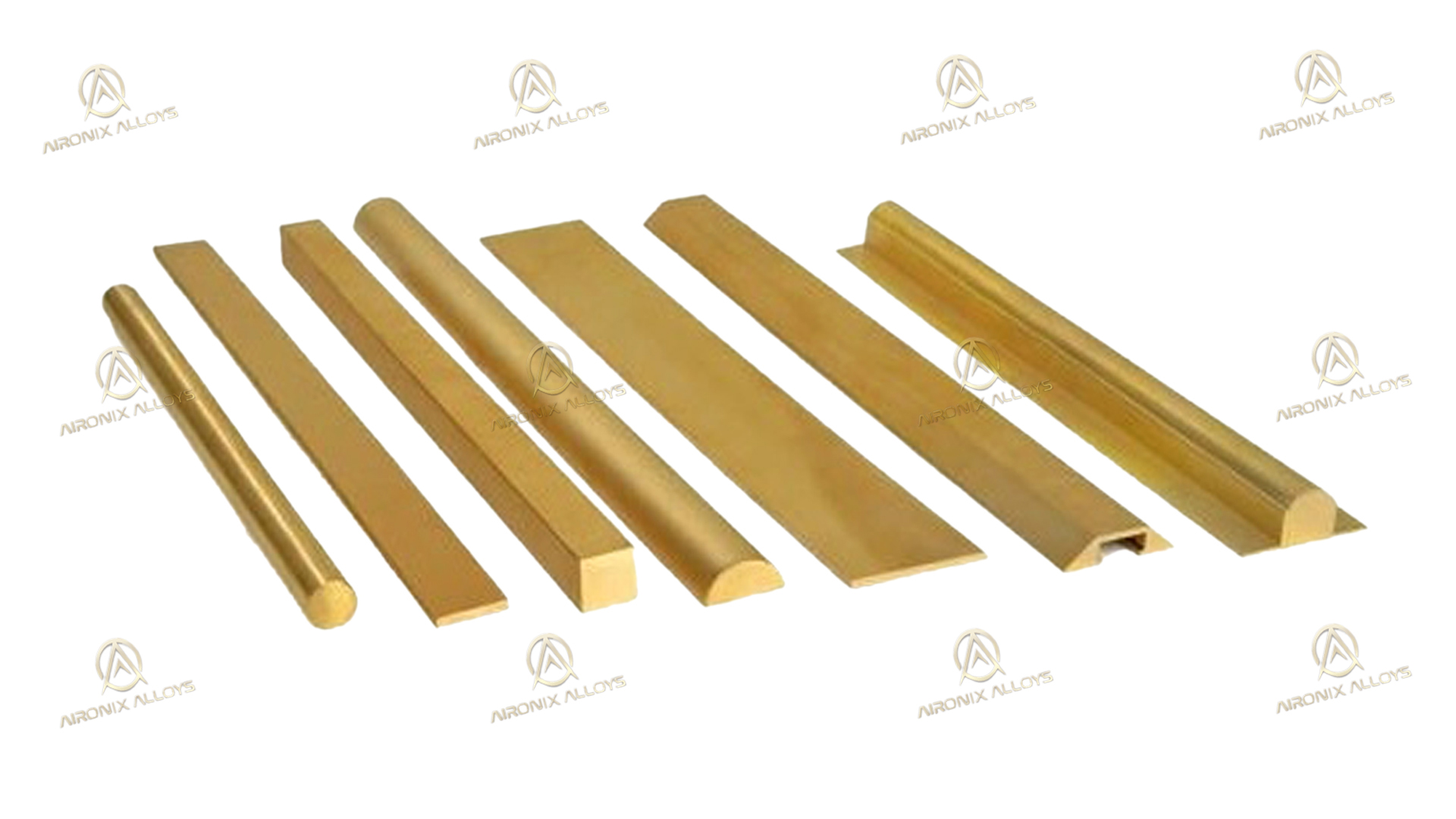
Brass solid sections are metal profiles manufactured
in different cross-sectional shapes to meet the needs
of industrial and engineering applications. Unlike
standard round bars, these profiles can be produced
in shapes such as square, rectangular, hexagonal and
other customised designs.
Their versatility makes them suitable for machining,
fabrication and the production of specialised brass
components. Manufacturers can select a profile
according to the dimensions, material grade and
design requirements of the finished product.
Aironix Alloys focuses on brass materials for industrial
buyers and component manufacturers seeking suitable
metal profiles for their production requirements.
Different cross-sections
For component production
Drawing-based requirements
Engineering applications
Understanding Brass Solid Profiles
Material structure, shapes and product characteristics
Solid brass profiles are made from copper-zinc alloys
and are supplied in defined cross-sectional shapes.
Their composition and manufacturing specifications
influence properties such as machinability, strength,
corrosion resistance and suitability for particular
applications.
Depending on the design, a solid profile can be used
directly as production stock or processed further
through cutting, turning, milling, drilling and other
machining operations.
The right profile helps manufacturers work with
dimensions and shapes that are closer to the finished
component design.
Common Types of Brass Solid Sections
Different shapes for different manufacturing requirements
Square Brass Sections
Square profiles offer a uniform cross-section
and are used in selected engineering, hardware
and machined component applications.
Rectangular Brass Sections
Rectangular profiles provide different width
and thickness combinations for components
requiring a flat or elongated section.
Hexagonal Brass Sections
Hexagonal bars are commonly used as stock
material for turned components, fasteners,
connectors and precision-machined parts.
Custom Brass Profiles
Special cross-sections can be considered
according to product drawings, dimensional
requirements and manufacturing capabilities.
Designed Around the Shape of Your Component
Choosing an appropriate cross-section is an important
part of component manufacturing. A suitable brass
profile can help simplify machining operations,
support dimensional requirements and provide
a practical starting material for specialised parts.
Key Characteristics of Brass Solid Sections
Why brass profiles are used in engineering and manufacturing
Good Machinability
Many brass grades offer useful machinability,
making them suitable for turning, milling,
drilling and other precision operations.
Corrosion Resistance
Brass provides corrosion resistance in many
environments, although actual performance
depends on alloy composition and service conditions.
Shape Versatility
Different cross-sectional shapes can be selected
according to the design and functional needs
of the final component.
Wide Material Selection
Different copper-zinc alloy grades are available
with varying properties for different production
and engineering requirements.
Brass Solid Section Specifications
Important parameters for product selection and ordering
The exact dimensions and material characteristics
should be finalised according to the intended use.
The following are common specification categories
to consider when sourcing brass profiles.
| Parameter | Specification |
|---|---|
| Product | Brass Solid Section / Brass Profile |
| Material | Brass Alloys |
| Profile Shape | Square, Rectangular, Hexagonal and Custom |
| Dimensions | As per customer requirement |
| Length | As per product specification |
| Surface Finish | As per manufacturing requirement |
| Material Grade | Based on application and agreed specification |
| Application | Machining and industrial component production |
How Brass Solid Sections Are Manufactured
From alloy selection to dimensional verification
The production route for brass profiles depends
on the cross-sectional shape, alloy, dimensions
and required product condition. Common manufacturing
stages may include:
Alloy Selection
Select an appropriate brass composition based
on the intended application, machining needs
and required material properties.
Profile Formation
Process the material using a suitable forming
or extrusion method to achieve the required
solid cross-sectional shape.
Inspection and Finishing
Verify important dimensions, profile shape
and surface condition against the agreed
product requirements.
Industrial Applications of Brass Profiles
Supporting diverse component manufacturing sectors
Brass solid sections are used as raw material for
manufacturing various components. Their suitability
depends on the selected alloy, profile shape,
dimensions and operating conditions.
Selected electrical connectors, terminals and conductive parts.
Machined fittings, connectors and specialised components.
Hardware parts, fittings and precision-machined products.
Custom profiles and parts used in engineering assemblies.
Selected fittings and components made from suitable brass grades.
Machined parts and profiles for equipment manufacturing.
How to Choose the Right Brass Section
Factors to evaluate before placing an order
Before purchasing a brass profile, manufacturers
should review the component drawing and production
requirements. Important selection factors include:
- Profile Shape: Identify whether a square, rectangular, hexagonal or custom profile is needed.
- Material Grade: Choose the alloy based on the component’s working conditions.
- Dimensions: Confirm width, thickness, across-flats dimensions or other relevant measurements.
- Tolerances: Define dimensional accuracy requirements.
- Surface Finish: Specify the required surface condition.
- Quantity: Consider production volume and material availability.
Brass Material Solutions from Aironix Alloys
Supporting industrial and precision manufacturing requirements
Aironix Alloys focuses on brass products and material
solutions for industrial buyers, engineering businesses
and component manufacturers. Selecting the right
material and profile is important for achieving
the required dimensions and production performance.
When evaluating brass solid sections, buyers should
consider material grade, cross-sectional shape,
dimensions, tolerance and application requirements.
Providing technical drawings or specifications can
help communicate the exact product requirement.
For product enquiries, share your required profile
shape, measurements and intended application with
the Aironix Alloys team.
Explore More Brass Products
Discover related materials and components
Explore other brass product categories from Aironix
Alloys to understand the range of materials used
across industrial and engineering applications.
Replace the link above with the correct live product
category URL if your website uses a different address.
Technical Resources & Useful References
Learn more about copper-based alloys, brass materials
and their engineering characteristics through these
external technical resources.
01
Explore copper alloy information, material resources and applications.
↗
Learn about copper, its alloys and industrial uses.
↗
Review technical property information for copper-based materials.
↗
Frequently Asked Questions
Common questions about brass solid sections
particular cross-sectional shape, such as square,
rectangular or hexagonal, for industrial and
engineering applications.
hexagonal profiles. Other shapes may be possible
depending on the manufacturing process and
supplier capabilities.
components, hardware, fittings, connectors and
various precision-machined industrial parts.
on the profile, manufacturing method, tooling
and supplier’s production capabilities.
strength, machinability, corrosion resistance
and operating environment when selecting
an appropriate alloy grade.
dimensions, tolerances, length, quantity and
technical drawing if available.
Need Brass Solid Sections for Your Next Project?
Contact Aironix Alloys to discuss your brass material
requirements, profile dimensions and industrial
component applications.