
Premium Brass Ball Valves for Reliable Flow Control
Discover the role of brass ball valves in modern plumbing,
water distribution and industrial fluid control systems.
Explore their construction, features, applications and
selection considerations.
What Are Brass Ball Valves?
Brass ball valves are mechanical flow-control devices used
to start or stop the movement of liquids and compatible
gases in a pipeline. They operate through a rotating ball
with a central opening. When the opening aligns with the
pipeline, fluid can pass through. A quarter-turn of the
handle rotates the ball and closes the passage.
Known for their practical operation and versatile design,
brass valves are commonly used in plumbing installations,
water supply networks, heating systems and selected
industrial applications.
Choosing the appropriate valve involves considering the
working pressure, temperature, fluid compatibility,
connection type and installation requirements.
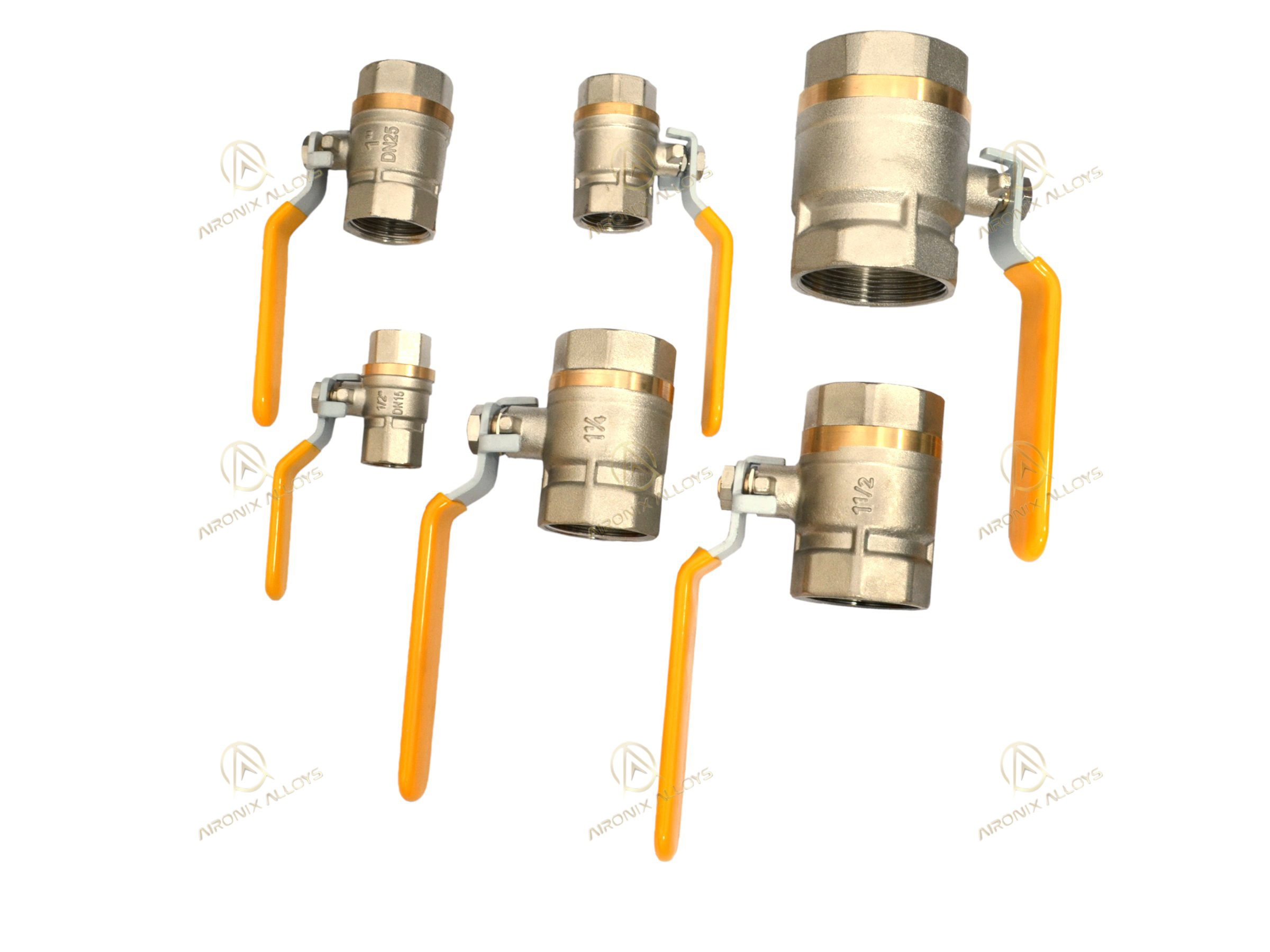
The correct valve helps support dependable shut-off,
appropriate flow control and long-term performance when
selected and installed according to system requirements.
Key Features of Brass Ball Valves
The design and material of a ball valve influence its
performance in different operating environments. Important
features to evaluate include:
A simple handle movement opens or closes the valve,
making operation convenient in suitable installations.
Suitable brass grades can offer good corrosion resistance
in compatible service conditions.
Many ball valve designs provide a practical solution
where installation space is limited.
Properly designed sealing components help provide
effective shut-off when used within rated conditions.
Threaded connection options can support integration
into different pipeline arrangements.
Valve design, seal material and service conditions
influence inspection and maintenance needs.
Built for Practical Pipeline Control
A brass ball valve typically contains a brass body, a
precision-machined ball, a stem, sealing seats and an
operating handle. The internal ball rotates to control
the passage of fluid through the valve.
The quality of machining, material selection, sealing
components and assembly all contribute to the valve’s
operating performance. Always check the manufacturer’s
rated pressure and temperature before installation.
Common Types of Brass Ball Valves
Ball valves are available in different configurations to
suit pipeline layouts and application requirements.
Common design options include:
Threaded Brass Ball Valve
Designed with threaded ends for connection to compatible
pipeline fittings. Thread standards and sizes should be
confirmed before ordering.
Full Port Ball Valve
Features a flow passage designed to be close to the
internal pipeline diameter, helping reduce flow
restriction compared with reduced-port designs.
Reduced Port Ball Valve
Uses a smaller internal flow passage than the
connecting pipeline size and may be selected for
specific installation requirements.
Two-Piece Ball Valve
Constructed from two main body sections assembled
together. The design and serviceability depend on
the manufacturer’s construction.
Brass Ball Valve Specifications
Product specifications vary according to the design,
material grade and intended application. Buyers should
confirm the following details with the manufacturer.
| Parameter | Details to Confirm |
|---|---|
| Product Type | Brass Ball Valve |
| Body Material | Brass grade as per product requirement |
| Size | Required nominal size |
| Connection | Threaded or other available connection |
| Thread Standard | BSP, NPT or specified thread standard |
| Port Design | Full port or reduced port |
| Handle Type | As per available product design |
| Working Pressure | Manufacturer-rated pressure |
| Operating Temperature | Based on seal material and product rating |
| Finish | As per customer specification |
Note: This is a purchasing checklist, not a certified
product specification sheet. Confirm actual product
ratings and availability before publication or purchase.
Applications of Brass Ball Valves
Depending on material compatibility, pressure rating
and valve construction, brass ball valves can be used
in a range of fluid-control installations.
How to Choose the Right Brass Ball Valve
Selecting a valve should begin with the operating
requirements of the pipeline. Consider these factors
before finalising your purchase:
1. Check the Fluid and Application
Identify the fluid being handled and confirm that the
valve body, seals and other wetted components are
compatible with the service.
2. Confirm Size and Thread Type
Match the valve connection size and thread standard
with the existing pipeline or fitting. Do not assume
that BSP and NPT threads are interchangeable.
3. Review Pressure and Temperature Ratings
Select a valve with suitable manufacturer-rated
operating limits for the intended system conditions.
4. Evaluate Construction and Sealing
Review the brass grade, ball finish, stem design,
seat material and assembly quality.
5. Consider Quality and Supplier Support
Ask for technical specifications, inspection details
and product documentation when evaluating a supplier.
Brass Product Solutions from Aironix Alloys
Aironix Alloys focuses on brass product solutions for
industrial and engineering requirements. When evaluating
brass ball valves, customers should consider material
suitability, dimensional requirements, connection
compatibility and application-specific performance.
For product enquiries, share your required valve type,
size, thread standard and operating conditions so that
the appropriate product specifications can be discussed.
Explore More Brass Products
Explore related brass product categories and discover
additional solutions for plumbing and industrial
applications.
Technical Resources & Further Reading
These external resources provide additional information
about copper alloys, brass materials and their properties.
-
International Copper Association
– Information about copper and copper alloy materials. -
Copper Development Association
– Technical resources about copper and its alloys. -
Copper Alloy Properties Search
– Reference information for copper alloy properties.
Frequently Asked Questions About Brass Ball Valves
in compatible pipeline systems. It is commonly found
in plumbing, water supply and selected industrial
installations.
Turning the handle by approximately 90 degrees
aligns or blocks the opening to control flow.
operation, compact construction, versatile connection
options and suitability for many compatible fluid
control applications.
applications when the valve material, seal
compatibility, pressure rating and temperature
limits match the operating conditions.
pressure and temperature ratings, sealing material
and intended application.
connecting pipe’s internal diameter. A reduced-port
valve has a smaller passage, which can create a
greater flow restriction.
Looking for Brass Ball Valve Solutions?
Contact Aironix Alloys to discuss your brass product
requirements, technical specifications and application needs.